
When medication isn’t enough, there may be another way.
ALTIUM HEALTH TMS THERAPY
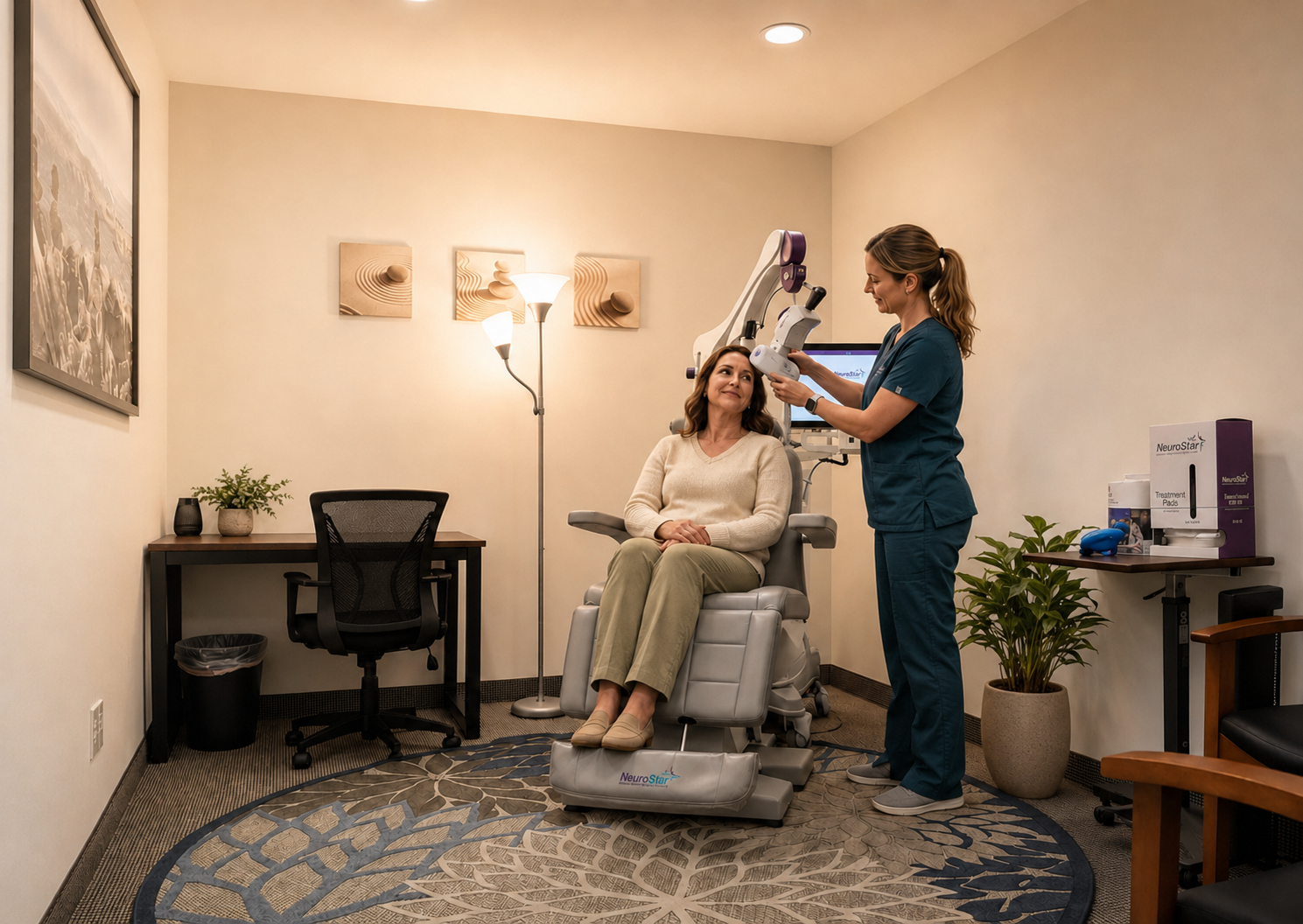
TMS is a non-invasive treatment for depression that uses targeted magnetic pulses to stimulate areas of the brain involved in mood—without medication, anesthesia, or downtime.
Take the Depression Screening →
A DIFFERENT APPROACH TO DEPRESSION
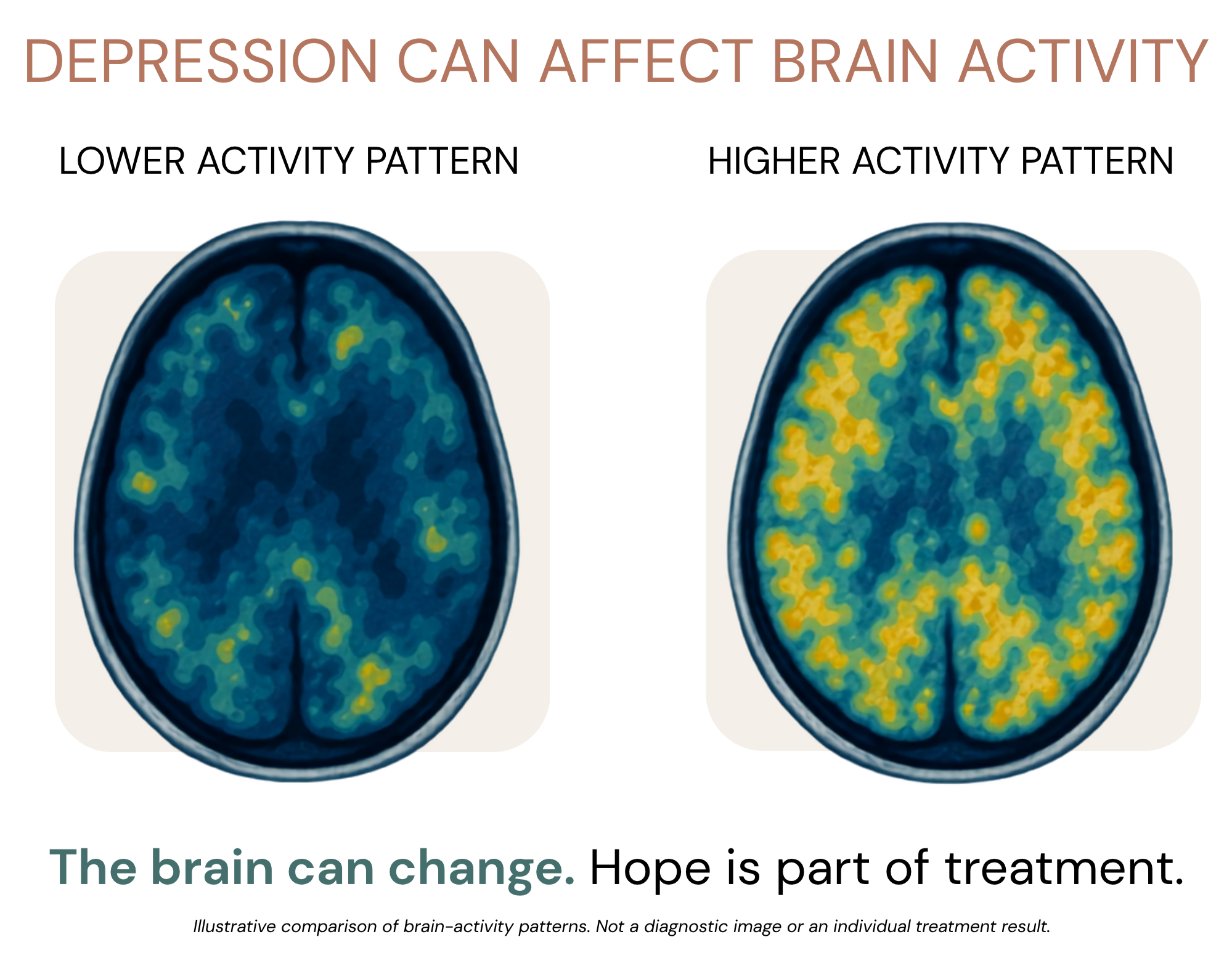
Transcranial Magnetic Stimulation uses focused magnetic pulses to activate areas of the brain involved in mood regulation. Treatment is delivered while you are awake and comfortable, and it does not circulate through the body like medication.
Treatment that works with your brain—not
against your life.
WHEN OTHER TREATMENTS HAVEN’T BEEN ENOUGH
TMS may be worth exploring if depression continues to interfere with your life despite previous treatment.
Antidepressant medication has not provided enough relief
Side effects have made medication difficult to continue
Depression keeps returning or remains persistent
You want a non-drug, outpatient treatment option
You still have options.
A consultation with our medical team will determine whether TMS is appropriate for you.


REAL-WORLD NEUROSTAR OUTCOMES

A treatment backed by
meaningful results.
83%
Experienced a measurable
response
62%
Achieved
remission
8.5M+
NeuroStar treatments
delivered
Response and remission figures are based on clinician-rated real-world outcomes for patients who completed an acute NeuroStar treatment course. Individual results vary.
WHAT TO EXPECT
Comfortable care,
one step at a time
01 — Your Personalized Mapping
We identify the treatment location and intensity that are right for you.
02 — Brief Outpatient Sessions
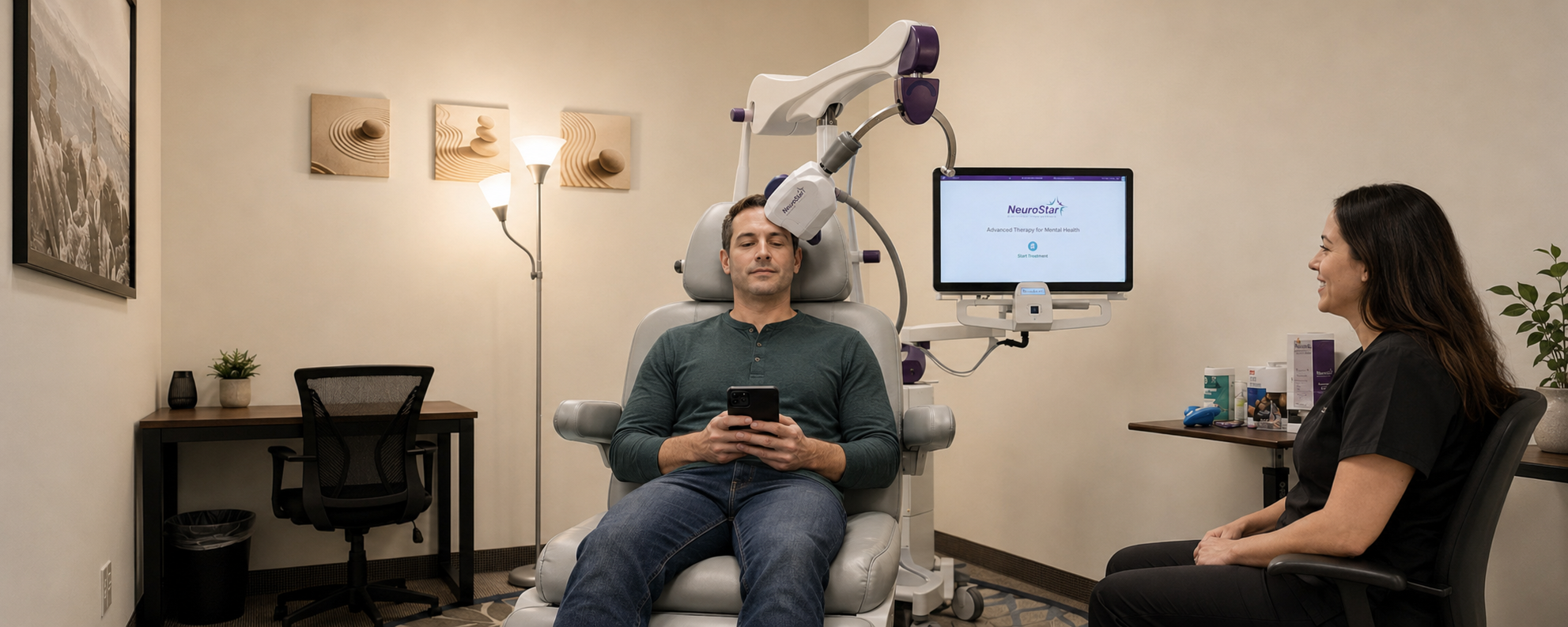
You’ll remain awake and comfortable while the magnetic pulses are delivered.
03 — Back to Your Day
There is no anesthesia or recovery period, so you can resume normal activities afterward.
TMS is covered by many insurance plans.
COVERAGE & COST
Coverage depends on your plan and treatment history. Our team will verify your benefits, explain requirements, and help you understand expected costs before treatment begins.
Clear answers before you begin.
QUESTIONS ABOUT TMS
We know you have questions. Our team is here to provide clear information so you can feel confident about your next step.
-
Most people describe TMS as a tapping or pulsing sensation on the scalp. Some experience temporary tenderness or discomfort near the treatment area, particularly during the first week. Your treatment settings can often be adjusted to help you remain comfortable as you get used to the sensation.
-
Most sessions last approximately 19–40 minutes, depending on your personalized treatment plan. You’ll remain awake and alert throughout the session.
-
A typical course includes 36 treatments completed over approximately six weeks. Sessions are generally scheduled five days a week, followed by a gradual taper. Your provider will recommend a schedule based on your symptoms, progress, and individual needs.
-
Yes. TMS does not require anesthesia or sedation and does not affect alertness. Most people can drive, return to work, and resume their normal activities immediately after treatment.
-
Many insurance plans cover TMS for depression when certain medical-necessity requirements are met. Coverage varies by plan and may depend on your diagnosis and previous treatment history. Our team will verify your benefits, explain any authorization requirements, and review anticipated costs with you before treatment begins.
-
TMS is generally well tolerated. The most common side effects are temporary scalp discomfort, tenderness, tingling, or headache, particularly during the first several treatments. These effects typically lessen as treatment continues. A seizure is a rare but serious potential risk, occurring in fewer than 0.1% of patients. Our medical team will review your health history and discuss the benefits and potential risks before treatment begins.